


Choosing reliable structural components for industrial machinery, automotive assemblies, and intelligent equipment remains one of the most challenging decisions for engineering buyers. Many enterprises only focus on surface dimensions and unit prices when purchasing cast parts, ignoring material stability, molding precision, post-processing durability, and long-term service attenuation. These invisible problems often lead to frequent equipment failures, increased maintenance costs, shortened service life of finished products, and uncontrollable batch quality differences. Practical industrial production practices prove that ordinary die-casting parts cannot meet the strict tolerance requirements of modern precision equipment, and low-quality raw materials will directly trigger hidden safety hazards in high-temperature and high-pressure operating environments.
High-precision aluminum alloy die casting components adopt integrated precision molding technology, which fundamentally avoids porosity, shrinkage cavities, deformation, and insufficient filling defects common in traditional casting processes. Unlike ordinary sand casting and gravity casting, pressure die-casting forms dense internal metal structure at one time, greatly improving overall mechanical strength, wear resistance, and corrosion resistance. Whether applied to automobile chassis accessories, power housing parts, or automation equipment structural brackets, the finished parts maintain stable dimensional accuracy under continuous vibration, temperature changes, and complex working conditions. Long-term field operation data shows that qualified aluminum die-casting parts can reduce later assembly adjustment procedures by more than 60%, effectively saving enterprise processing time and labor expenditure.
Most engineering purchasers overlook the matching degree between material ratio and application scenarios. Ordinary aluminum alloy castings have poor oxidation resistance in humid and corrosive environments, and are prone to cracking and aging after long-term use. Multilux professional die casting enterprise optimizes aluminum alloy formula according to different industry working conditions, balancing lightweight performance, load-bearing capacity, and environmental adaptability. The customized material ratio ensures that parts remain stable in low-temperature cold environments, high-temperature operation environments, and coastal humid corrosive environments, completely solving the frequent replacement problem caused by mismatched material performance. This customized production logic greatly reduces the comprehensive cost of the whole life cycle of parts, rather than only pursuing low initial purchase prices.
Batch consistency has always been a deep-seated pain point plaguing die-casting parts procurement. Many suppliers have unstable mold precision and backward production equipment, resulting in large size errors between single products. Unqualified batch differences will cause assembly jams, poor fitting tightness, and abnormal operation of supporting equipment. Serious cases will even cause safety accidents of complete machines. Professional precision die-casting production adopts fully automatic digital mold clamping system, real-time temperature control casting process, and multi-station dimensional inspection. Each batch of products undergoes strict tolerance detection before leaving the factory, ensuring that every finished product meets unified industry high-standard specifications and meets mass assembly production requirements.
Surface treatment quality directly determines the service life and appearance grade of aluminum alloy die-casting parts. Many cheap cast parts only carry simple rough polishing, lacking anti-rust, anti-oxidation, and wear-resistant coating treatment. After short-term use, the surface will appear peeling, rusting, color fading, and scratches, affecting overall product grade and operation safety. Standard precision die-casting supports multiple customized surface processes including anodizing, powder spraying, electroplating, and passivation. Reasonable surface treatment not only beautifies the product appearance but also forms a protective film on the metal surface, isolating air, moisture, and chemical corrosion, extending the effective service cycle of parts by multiple times.
Performance Comparison Of Ordinary Cast Parts & Premium Precision Aluminum Die Cast Parts
| Performance Index | Ordinary Aluminum Cast Parts | High Precision Aluminum Alloy Die Cast Parts | Practical Production Impact |
|---|---|---|---|
| Dimensional Tolerance | ±0.15mm~±0.3mm | ±0.02mm~±0.05mm | Avoid assembly gaps and matching errors |
| Internal Structure Density | Loose, easy to have pores | High density, compact metal structure | Reduce fracture and air leakage failures |
| High Temperature Resistance | ≤120℃ Long-term Use | ≤220℃ Stable Operation | Suitable for power and thermal equipment |
| Corrosion Resistance | Poor, easy to oxidize and rust | Excellent, adapt to harsh outdoor environments | Reduce frequent part replacement costs |
| Batch Consistency | Large Fluctuation, Unstable Quality | High Uniformity, Zero Abnormal Difference | Guarantee mass production assembly efficiency |
| Load Bearing Performance | General, Easy Deformation Under Pressure | High Strength, Anti-deformation And Anti-impact | Meet heavy-duty mechanical structure requirements |
Deep hidden problems in die-casting parts are often not reflected in the initial trial stage. Many buyers receive samples with good appearance and size, but quality problems explode after mass use. The core reason lies in unqualified raw aluminum ingots, unreasonable mold cooling process, and lack of stress relief treatment after casting. Unrelieved internal stress will cause slow deformation of parts during long-term operation, leading to gradual loosening of equipment connections and declining operating accuracy. Formal die-casting production adds professional aging stress relief procedures, eliminating internal structural stress of finished products, and ensuring long-term use without deformation or displacement.
Lightweight and high strength are core advantages of aluminum alloy die-casting parts in modern industrial upgrading. With the continuous development of new energy vehicles, intelligent automation, and aerospace supporting industries, equipment puts forward higher requirements for lightweight structural parts. Aluminum alloy is much lighter than iron and steel castings, while its compressive and tensile strength fully meets industrial load standards. Replacing traditional iron parts with precision aluminum die-casting parts can effectively reduce overall equipment weight, lower energy consumption, improve operation flexibility, and conform to the green energy-saving development trend of modern manufacturing industry.
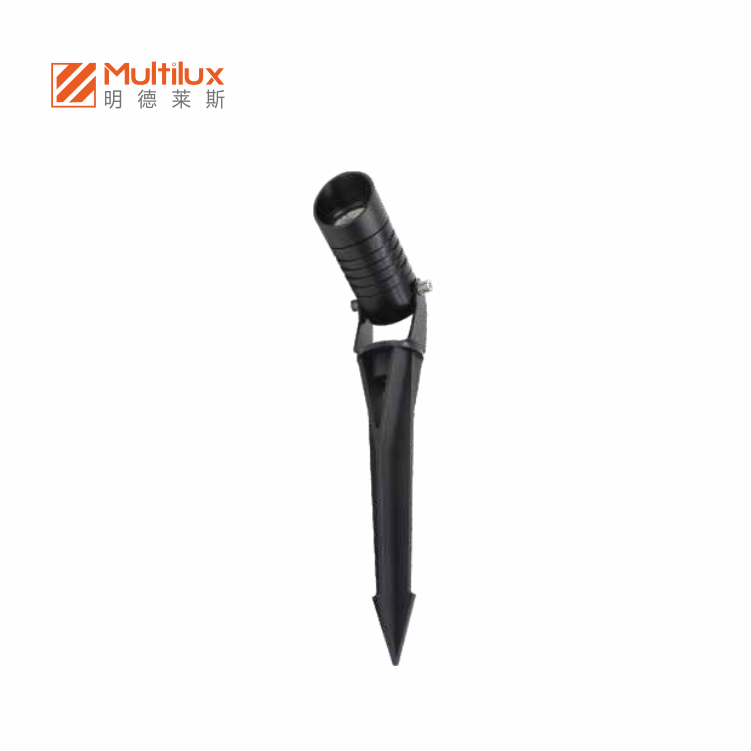
After-sales matching and customized flexibility also determine the actual use value of die-casting products. Irregular small factories can only produce standard universal parts, unable to adjust structure, thickness, hole position, and process according to customer drawings. Once special-shaped structural parts are needed, the production cycle is long and the error rate is high. Professional die-casting manufacturers support full-process customized services from drawing analysis, mold opening design, trial production verification to mass delivery. They can quickly respond to non-standard part customization needs, optimize product structure according to actual working conditions, and provide complete technical matching solutions for downstream equipment assembly.
In summary, selecting aluminum alloy die-casting parts cannot simply compare unit prices. It is necessary to comprehensively judge material quality, molding precision, process technology, batch stability, and full-life cost performance. Digging out hidden quality risks, environmental adaptation problems, and subsequent assembly troubles in advance can help enterprises avoid unnecessary losses. Reasonable selection of standardized high-precision die-casting components can stabilize product quality, reduce comprehensive production costs, and enhance the core competitiveness of finished equipment in the long-term industrial production operation.